
Category / Uniflex Furniture
Uniflex was a British furniture brand that emerged from the firm L. Lazarus & Sons, founded in 1910 by Levy Lazarus in East London. Initially specialising in traditional bedroom furniture, the company evolved significantly after the Second World War, reflecting changing tastes in British interiors. Around 1960, it rebranded as Uniflex and expanded into modern living and dining furniture, embracing the growing popularity of mid-century design.
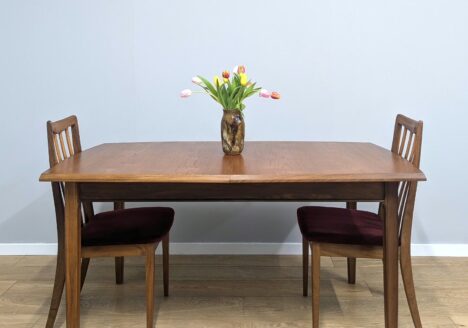
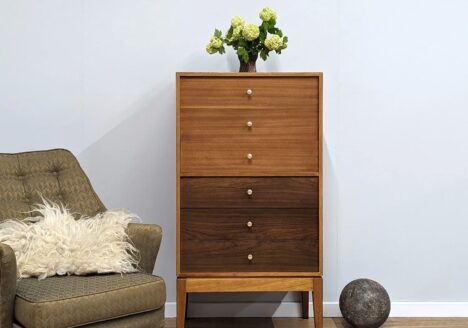
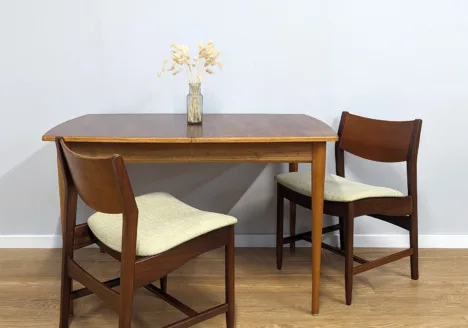
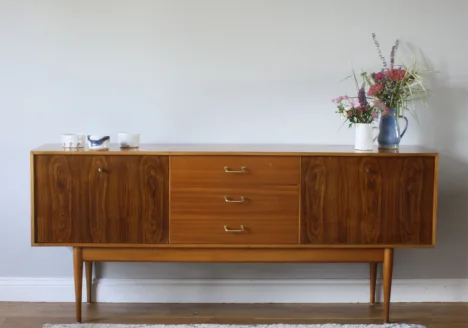
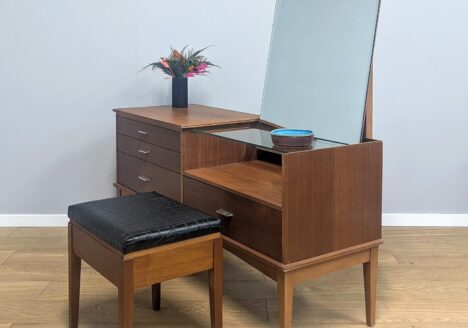
During the 1950s and 1960s, Uniflex became known for its forward-looking approach, producing minimalist furniture characterised by clean lines, lack of handles, and the use of materials such as teak, rosewood, plywood, and metal. Its designs often featured distinctive sled legs and modular forms, aligning with contemporary European trends and helping bring modern design to a wider market.
Central to Uniflex’s success were its designers, particularly Peter Hayward and Gunther Hoffstead. Hayward introduced early ranges such as the successful “M Range” in 1958, combining quality craftsmanship with affordability. Hoffstead, who joined as a consultant in the early 1960s, developed more innovative collections like the “Q Range” and contributed to the company’s modern identity, even influencing factory design.
Although Uniflex did not achieve the mass-market dominance of some competitors, it became a leading name in British mid-century furniture. Today, its pieces are highly valued for their design quality and remain important examples of post-war modernism.