
Category / Jentique Furniture
Jentique Furniture was a British manufacturer whose roots can be traced to the early 20th century, gaining real prominence in the post-war decades of the 1950s and 1960s. The company is closely associated with Geoffrey Bowman Jenkins, an inventive entrepreneur who established the business in Norfolk after earlier ventures in toy and gramophone production. Although Jenkins lost control of the firm in the 1930s, Jentique evolved into a significant mid-century brand, responding to the growing demand for modern, practical furniture.
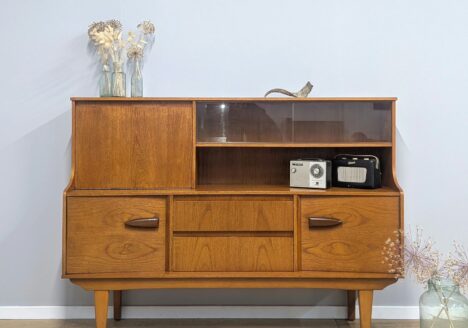
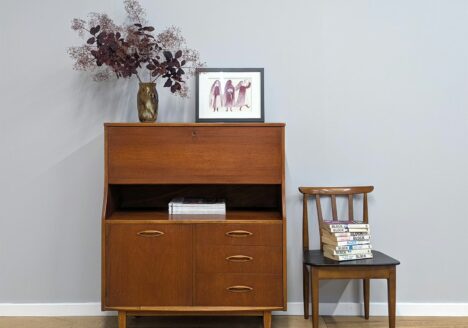
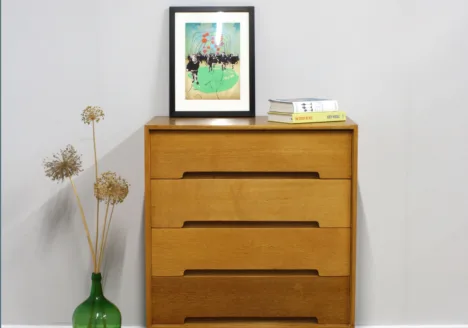
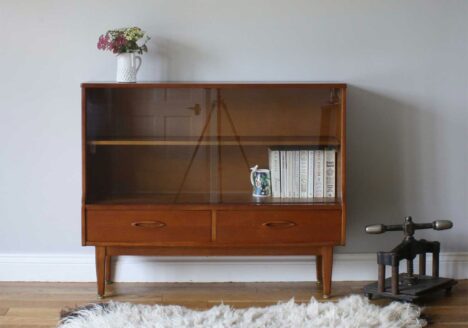
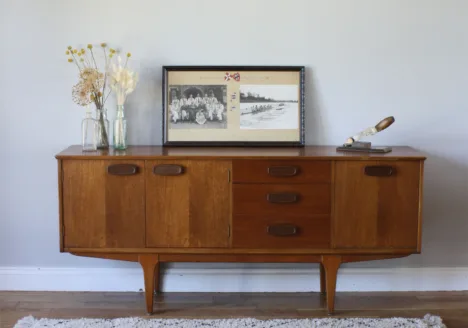
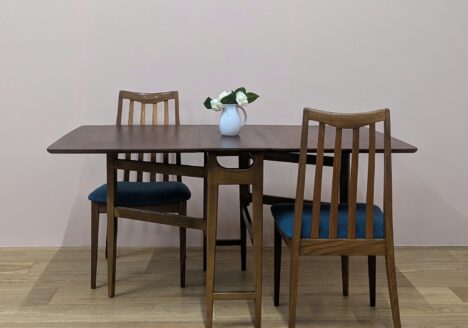
In the post-war period, Jentique embraced contemporary design trends, particularly Scandinavian modernism. Key designers such as Patricia Kay and Clive Latimer helped shape its output. Kay contributed to refined, fashionable ranges like the Campaign series, while Latimer’s 1958 Spanish chest became one of the company’s most recognisable pieces. Rather than rigid “ranges” in the way some competitors operated, Jentique produced coordinated dining and storage furniture—sideboards, bureaus, and cabinets—often unified by signature features such as sculpted handles, slim legs, and rich teak or afromosia woods.
Jentique’s enduring appeal lies in its balance of quality craftsmanship and understated design. Its furniture is known for elegant proportions, practical layouts—such as sliding doors and integrated storage—and a warmth derived from natural materials. These qualities make it highly adaptable to modern interiors, where clean lines and multifunctional pieces are valued.
Today, Jentique is widely collected not only for its mid-century aesthetic but also for its durability and versatility. Its designs feel neither overly ornate nor starkly minimal, allowing them to integrate into contemporary homes. This timelessness ensures Jentique remains a respected name in British furniture history.